
Land Speed Record Holder
2017 - 2025
Pursuit of a World Record
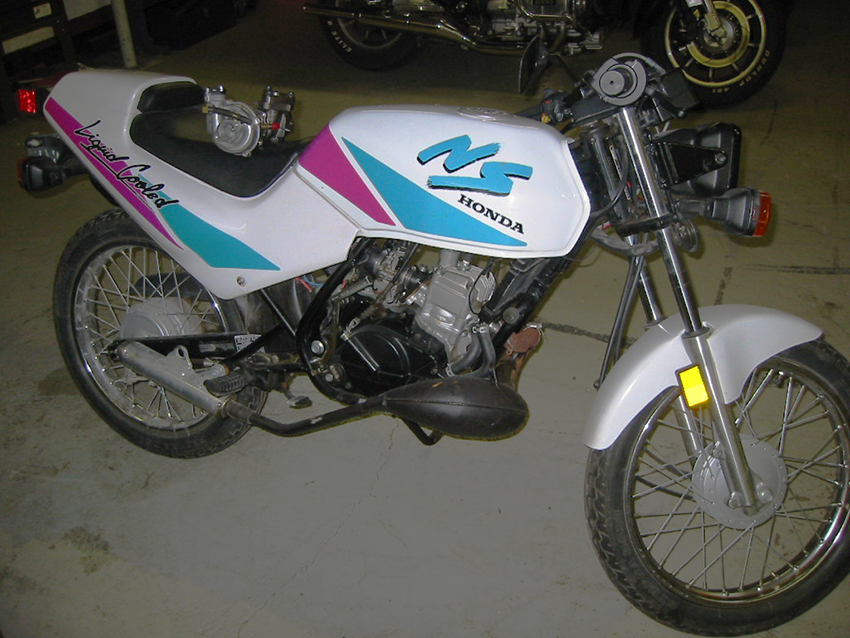
How Did It Start?
After finding the motorcycle that would become the foundation for this project, the pursuit of a Land Speed Record slowly started to take shape — literally.
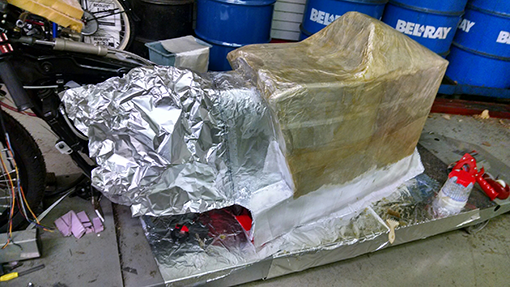
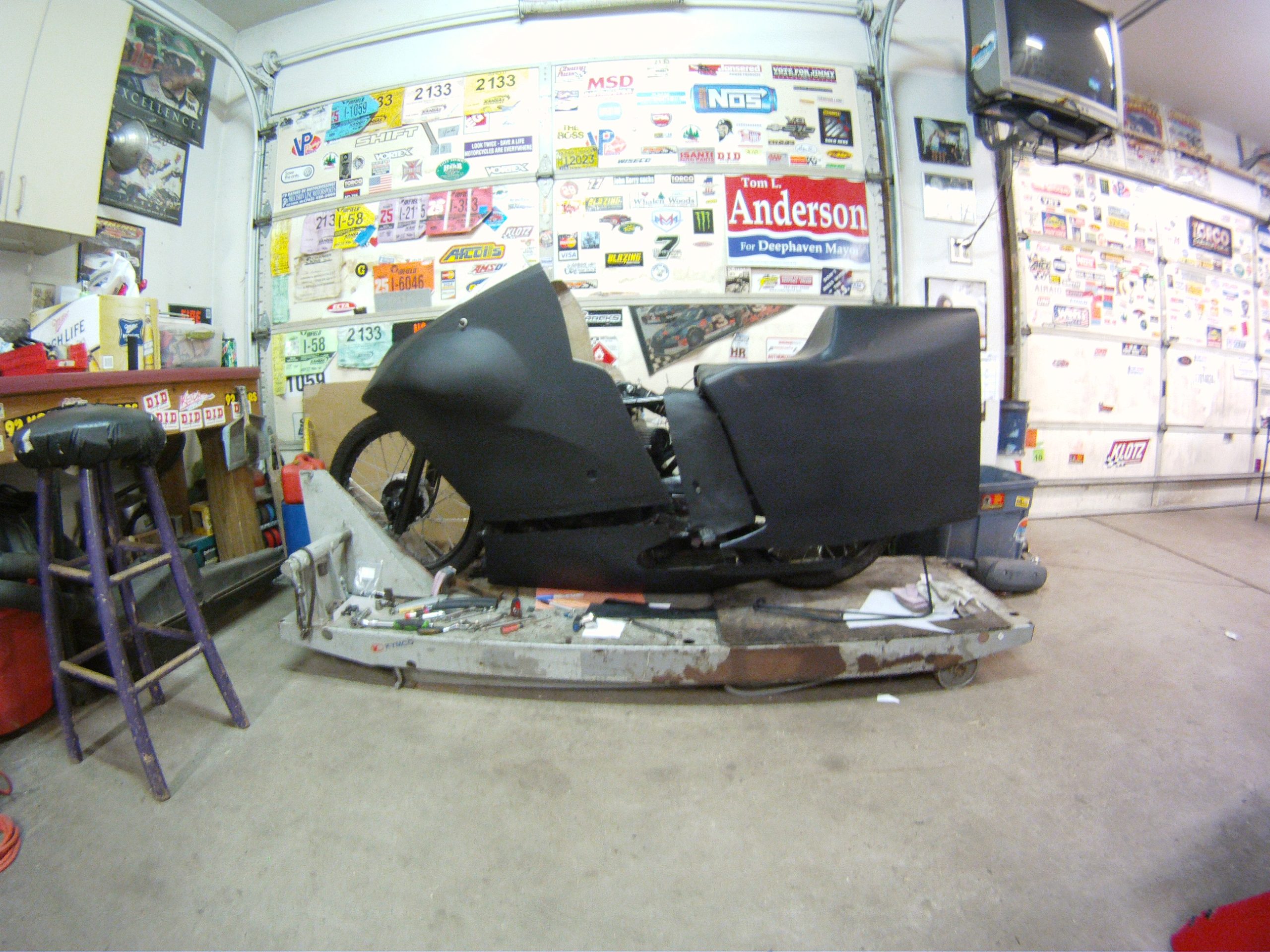
At first, it was nothing more than cardboard, foam board, and fiberglass. Making something from nothing.
Standing there looking at the pile of parts and rough mockups, my first thought was simple:
This is going to be difficult.
And slow.
Where does someone even begin building a land speed motorcycle?
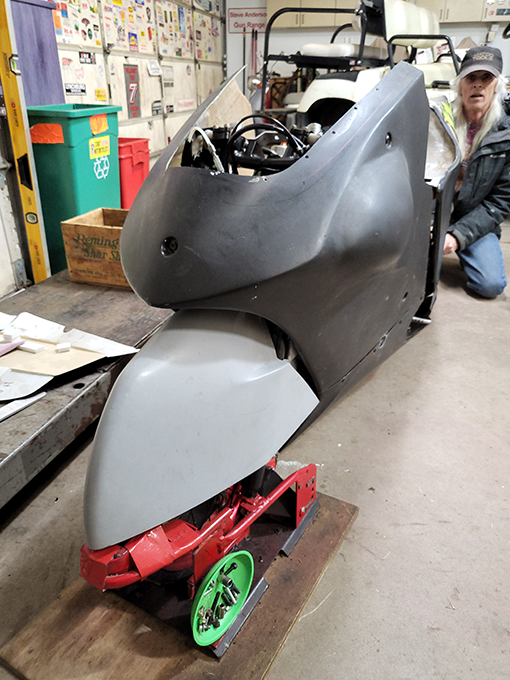
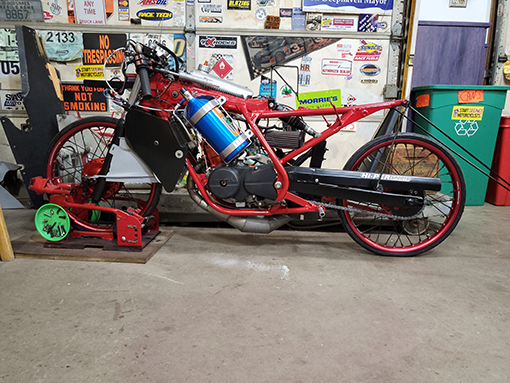
For me, it started with the rear wheel and swing arm. Nothing covered them, so I began shaping cardboard around the bike, trying to make everything as aerodynamic as possible. It looked promising, but the cardboard flexed too much to fiberglass over properly.
Next came foam board. Harder to shape, but rigid enough to finally start creating real body panels.
That’s when the project truly began.
But the story actually starts years earlier.
2007
The Beginning
In 2007, I bought a motorcycle with a top speed of only 50–55 mph.
Like most projects, it started small.
First came a new exhaust pipe, and suddenly we were running around 60 mph.
That was enough to spark something.
Next, I rebuilt the engine with mild porting and added a 24mm carburetor. After tuning and testing, we pushed the bike to 70 mph.
For a small-displacement motorcycle, every mile per hour felt earned.
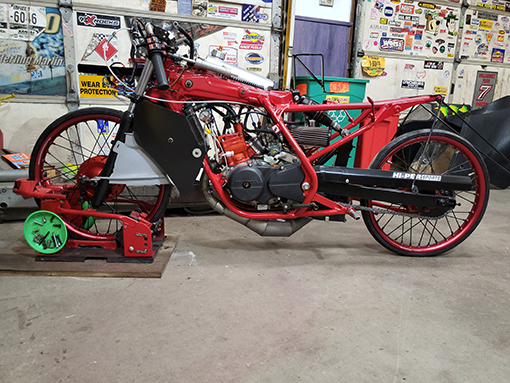
2008 2009
Chasing Speed
The next phase was all experimentation.
We tried new pistons, heavily milled the cylinder head — about .125 thousandths — and switched to race gas. That combination pushed us beyond 75 mph.
In 2008 and 2009, we set records at the East Coast Timing Association.
But we weren’t finished.
We installed nitrous oxide, spent countless hours dialing in jetting, and eventually reached speeds between 85 and 90 mph.
Then came aerodynamics.
We added a fairing and tested constantly:
• more porting
• different gearing
• countless tuning changes
• five different exhaust pipes
Every adjustment mattered.
Eventually we reached 90–95 mph.
That’s when the next goal became obvious:
Bonneville.
The First Trip to Bonneville
The first trip to the Bonneville Salt Flats was both humbling and inspiring.
We came up short of the world record.
Part of the learning curve.
But Bonneville changes you the first time you see it. Endless white salt stretching into the horizon. Engines echoing across miles of open space. Racers chasing impossible numbers with machines they built in their own garages.
More importantly, we learned.
We studied how other bikes were built. We talked with racers. We looked closely at streamliners and aero designs.
Everywhere we turned there were ideas, solutions, and lessons.
And suddenly we realized just how much work still lay ahead.
2011
Learning Aerodynamics
By 2011, the focus shifted heavily toward aerodynamics.
We had very little experience building bodywork from scratch.
Years earlier, in the early 2000s, I had adapted road race plastics from a Honda RS125 two-stroke GP bike from Europe. I fabricated mounts and modified the lower fairing to fit our motorcycle.
At the time, it seemed to work reasonably well.
But at Bonneville, reality arrived quickly.
A couple of experienced streamliner builders asked me to sit on the bike and tuck in. They walked around it, studying the shape carefully before delivering their honest opinion:
“Your fairing sucks.”
Not exactly what I wanted to hear.
But they were right.
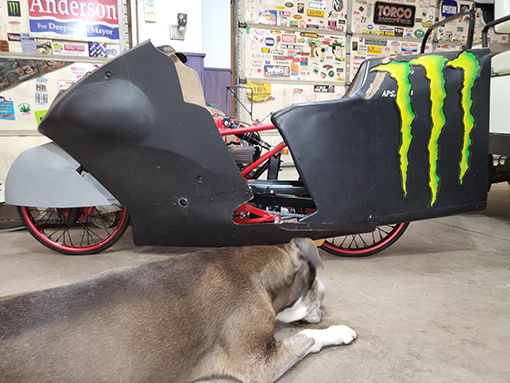
There was too much open area everywhere. Turbulence. Drag. Air getting trapped where it shouldn’t.
That conversation completely changed how we approached the bike.
From that point forward, aerodynamics became just as important as horsepower.
2026
Back to Bonneville
Now, in 2026, we’re heading back to Bonneville.
This time with years of additional knowledge in:
• engine development
• tuning
• fabrication
• aerodynamics
• chassis setup
The goal is clear:
To set a new world record in the 50cc class and push this motorcycle beyond 100 mph.
For some people, 100 mph may not sound extraordinary.
But on a hand-built 50cc motorcycle, it represents years of persistence, failures, lessons, and determination.
This project was never just about speed.
It’s about building something with your own hands.
Learning through failure.
Refusing to quit.
And chasing a goal most people would never attempt.
Bonneville has a way of testing both machines and the people who build them.
And we’re going back one more time.
2010 Record Attempt
50 cc at Boneville with nitrous oxide. Just shy of the land speed record for 50cc, class APS/F-50